Analysis — June 2026. The anticipated NVIDIA and Microsoft announcement feels like far more than a new PC launch.
What we are witnessing is the AI stack extending beyond the data center and the cloud, moving closer to the user and the devices we use every day.
For NVIDIA, this is a strategic expansion into the CPU/SoC market — a market significantly larger than its traditional GPU business. For Microsoft, it is another major step in pulling hardware, AI and the Windows OS closer together than ever before.
The implications go well beyond benchmark charts.
The biggest PC architecture shift since Apple Silicon
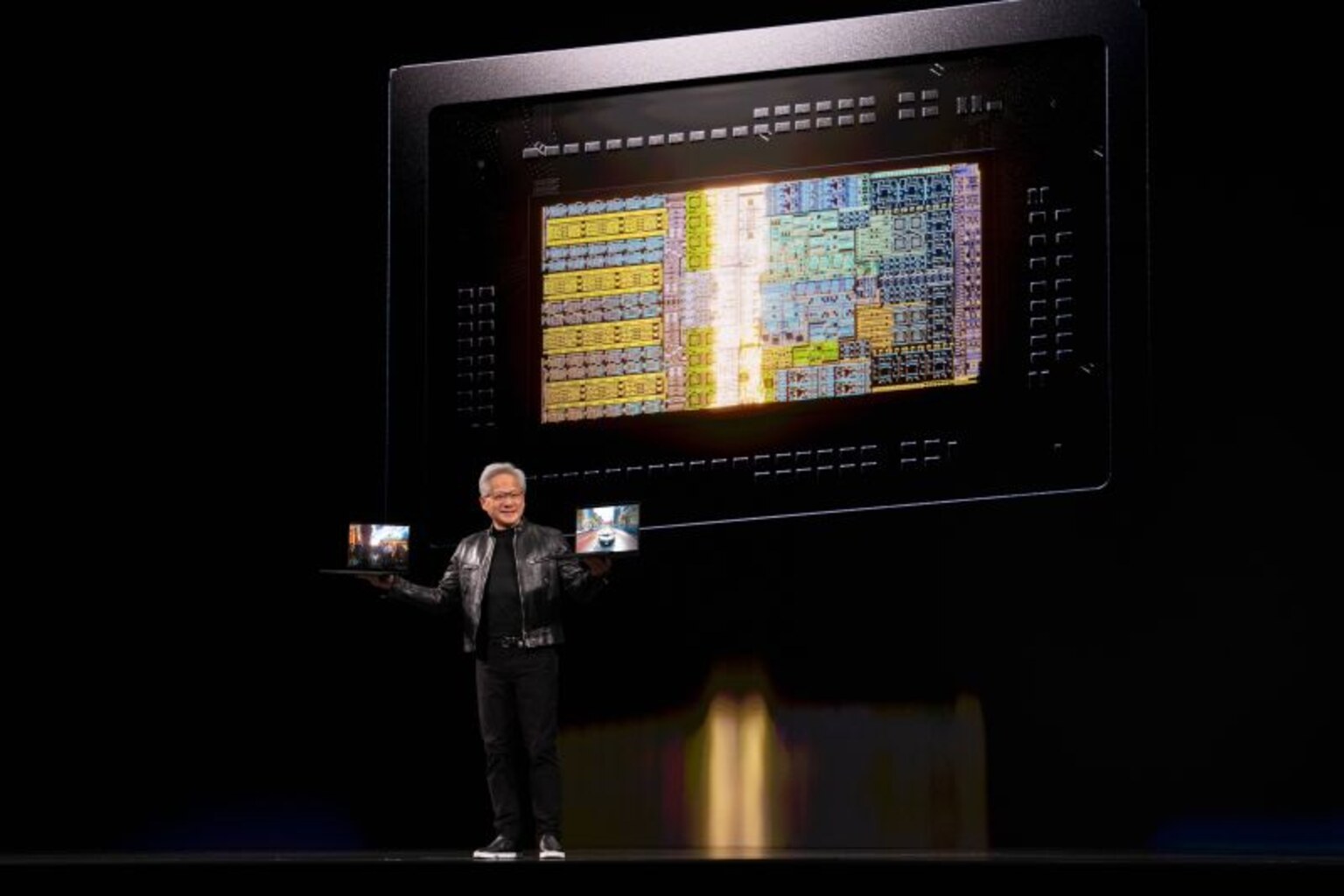
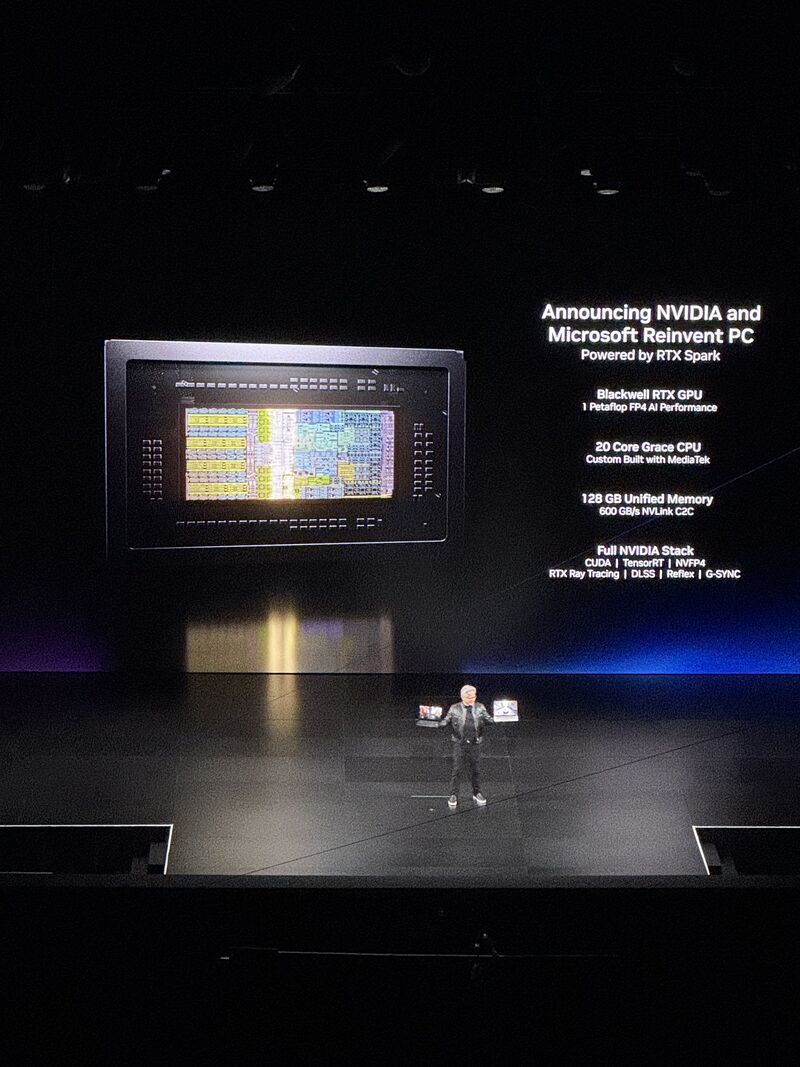
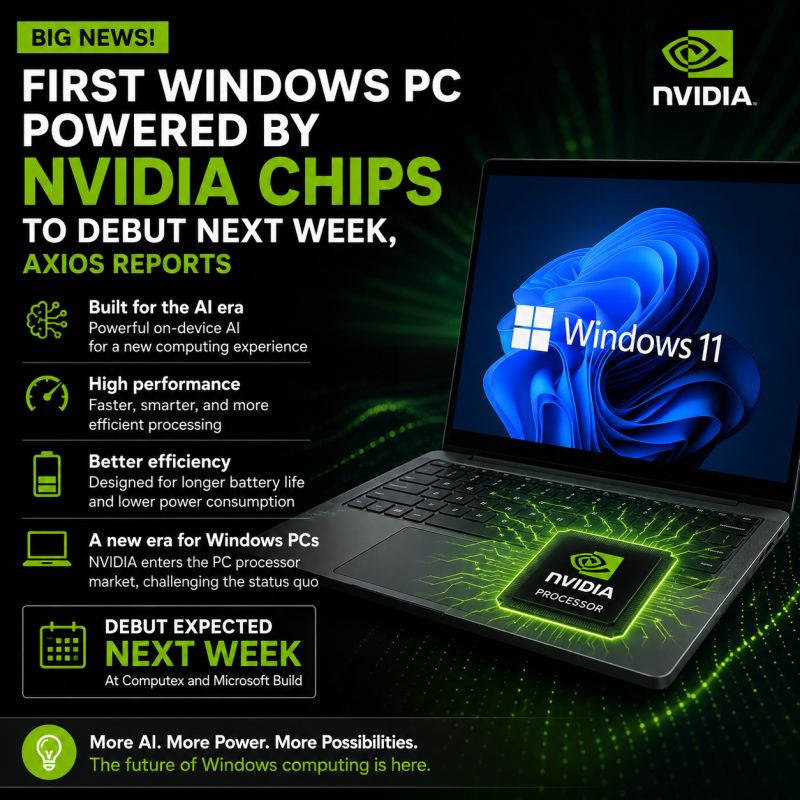
At Computex 2026, NVIDIA unveiled RTX Spark, a new AI-focused superchip designed specifically for Windows PCs. The platform combines:
- Up to 1 petaflop of AI performance
- Up to 128 GB unified memory
- Full NVIDIA CUDA and RTX ecosystem support
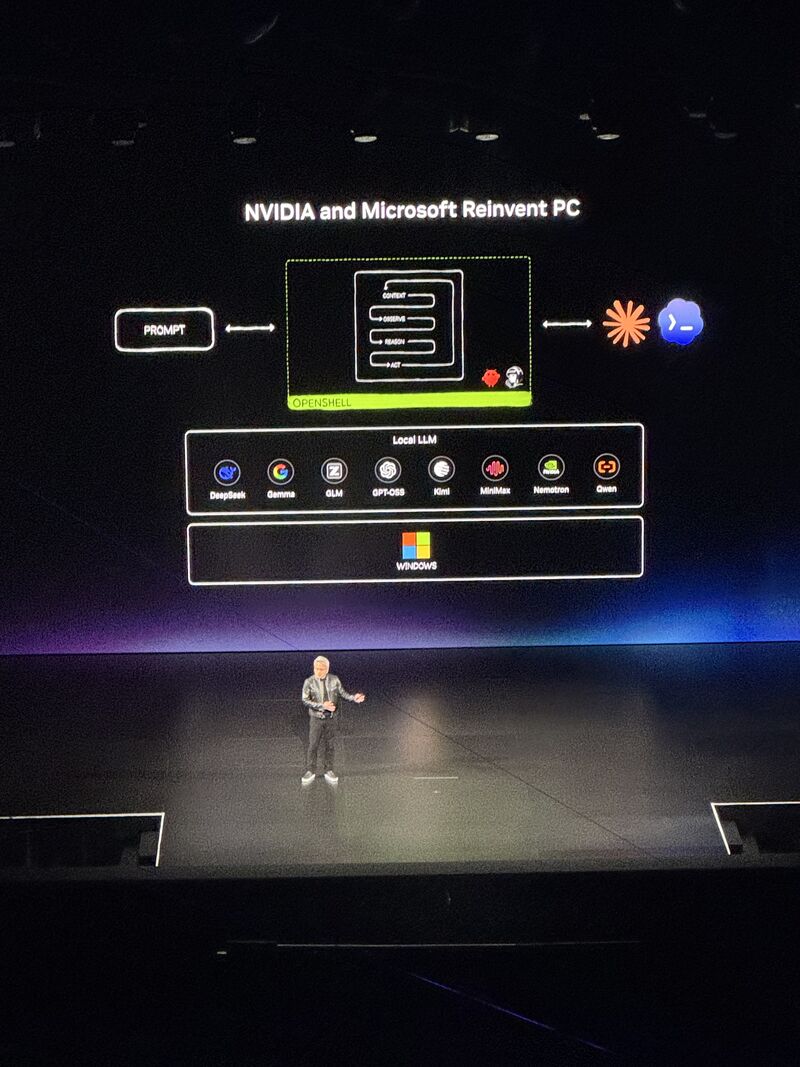
- Local execution of large AI models
- AI agents running directly on the device rather than in the cloud
Microsoft and NVIDIA framed the launch as the start of a new generation of Windows computers built for personal AI agents. In Jensen Huang's words: "The PC is being reinvented."
That statement should not be underestimated.
Why this matters
For decades, the PC processor market was largely an Intel vs AMD battle. Today the landscape looks very different — Microsoft, NVIDIA, Qualcomm, Intel and AMD are all racing toward the same destination: AI-first computing.
- AI models running locally
- Reduced dependence on cloud infrastructure
- Faster AI response times and lower latency
- Greater privacy and on-device security
- New categories of AI-native software
- A completely new hardware upgrade cycle
The question is no longer whether AI will become part of the PC. The question is how quickly consumers and businesses adopt it.
Microsoft is going all-in
Alongside RTX Spark, Microsoft announced new Windows experiences tuned for the platform and introduced the Surface RTX Spark Dev Box — a compact AI development machine featuring up to 128 GB unified memory, 1 petaflop AI performance, local LLM execution and native CUDA on Windows.
This is a major signal. Microsoft is no longer treating AI as a feature. It is treating AI as the foundation of the next generation of Windows.
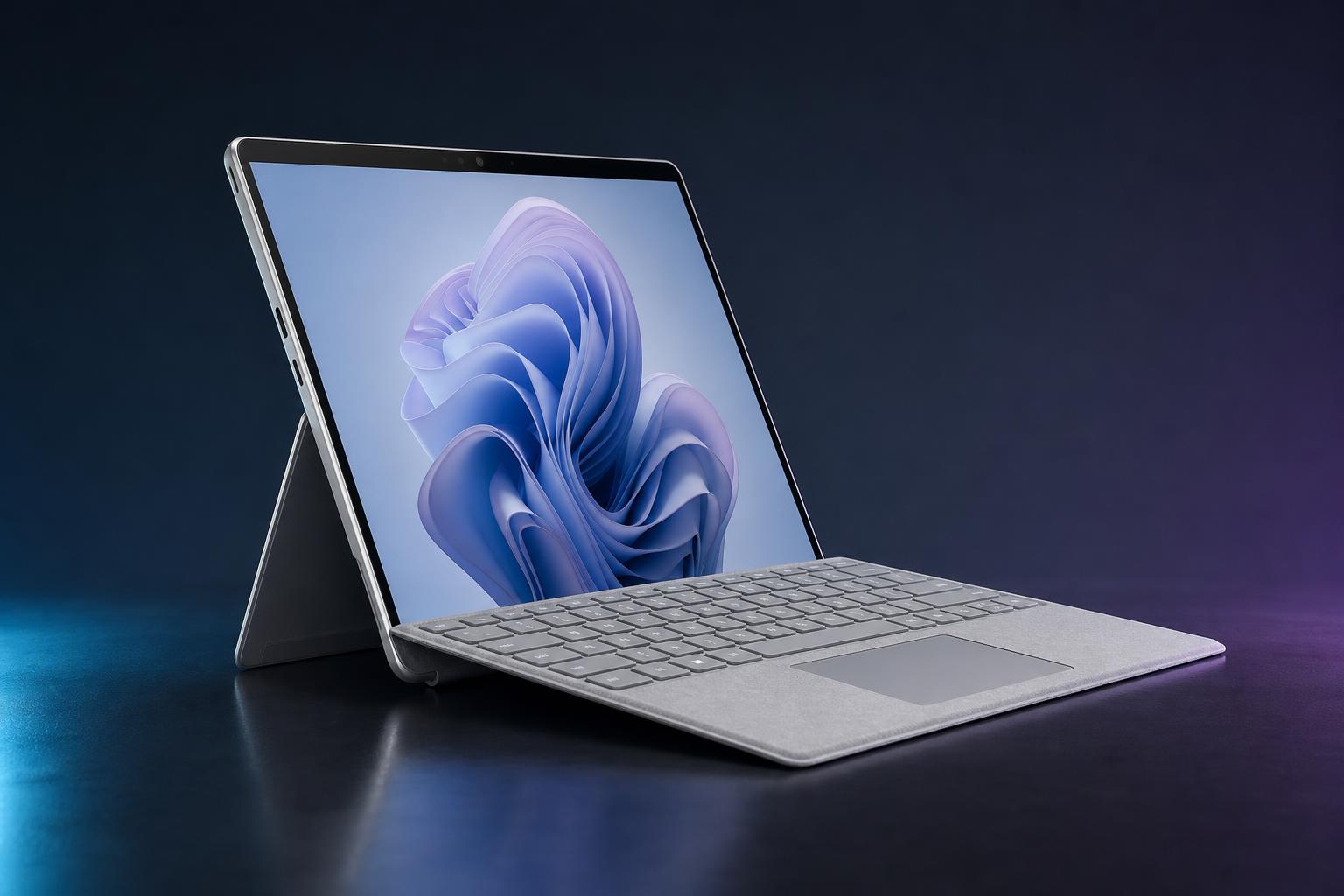
Inside the Surface Laptop Ultra
The Surface Laptop Ultra is the consumer face of this shift — a 15-inch maker-class machine that pairs the new NVIDIA silicon with a premium chassis.
| Spec | Surface Laptop Ultra |
|---|---|
| Weight / thickness | < 2 kg (4.5 lb) · < 18 mm |
| Display | 15" mini-LED PixelSense Ultra, 3:2, 262 ppi |
| Brightness | Up to 2000 nits peak HDR |
| Thermals | Up to 2.5× capacity of Surface Laptop 7 (15") |
| GPU / AI | NVIDIA RTX Spark — local agents, creation, gaming |
| Memory | Up to 128 GB unified |
| Storage | User-replaceable SSD |
| Ports | USB-C, USB-A, HDMI, full SD card reader, headphone |
| Security | Hardware-rooted, Windows Hello facial recognition |
| Finish | Platinum and new Nightfall |
Two details stand out: the all-new thermal system built for sustained AI workloads, and a replaceable SSD — a clear nod to longevity and managed-fleet IT.
The new performance standard
The numbers being discussed would have sounded impossible for consumer PCs just a few years ago. RTX Spark systems are expected to support:
- Local 120B-parameter AI models
- 90 GB+ 3D scenes
- 12K video editing workflows
- Real-time AI generation
- AAA gaming with RTX acceleration
This is not an incremental upgrade. It is a new computing category.
The user experience shift
What excites me most isn't the spec sheet — it is the experience layer:
- Faster AI interactions with reduced latency
- Greater privacy through on-device processing
- Offline AI capabilities without constant cloud dependence
- More intelligent personal assistants and AI agents
- New productivity workflows powered by local inference
For years most computing advances have been incremental. This feels different.
The AI discovery layer
An even bigger trend is emerging underneath the hardware story.
Consumers increasingly discover products through AI systems rather than traditional search engines. The battle is no longer only about silicon — it's about who owns the discovery layer: the marketplaces, the category-defining digital assets, and the reference points AI assistants draw from when they recommend a laptop.
That shift may ultimately prove more important than the hardware itself.
The real question
Will RTX Spark become the Windows equivalent of Apple Silicon? Nobody knows yet. But one thing is clear: the PC industry is entering a new phase.
The age of the Personal AI Computer has officially begun — and for the first time in years, consumers and enterprises have a genuine reason to upgrade their laptops, desktops and workstations.
The next generation of computing may not be defined by faster processors alone. It may be defined by how intelligently our computers work alongside us — and that shift is just beginning.