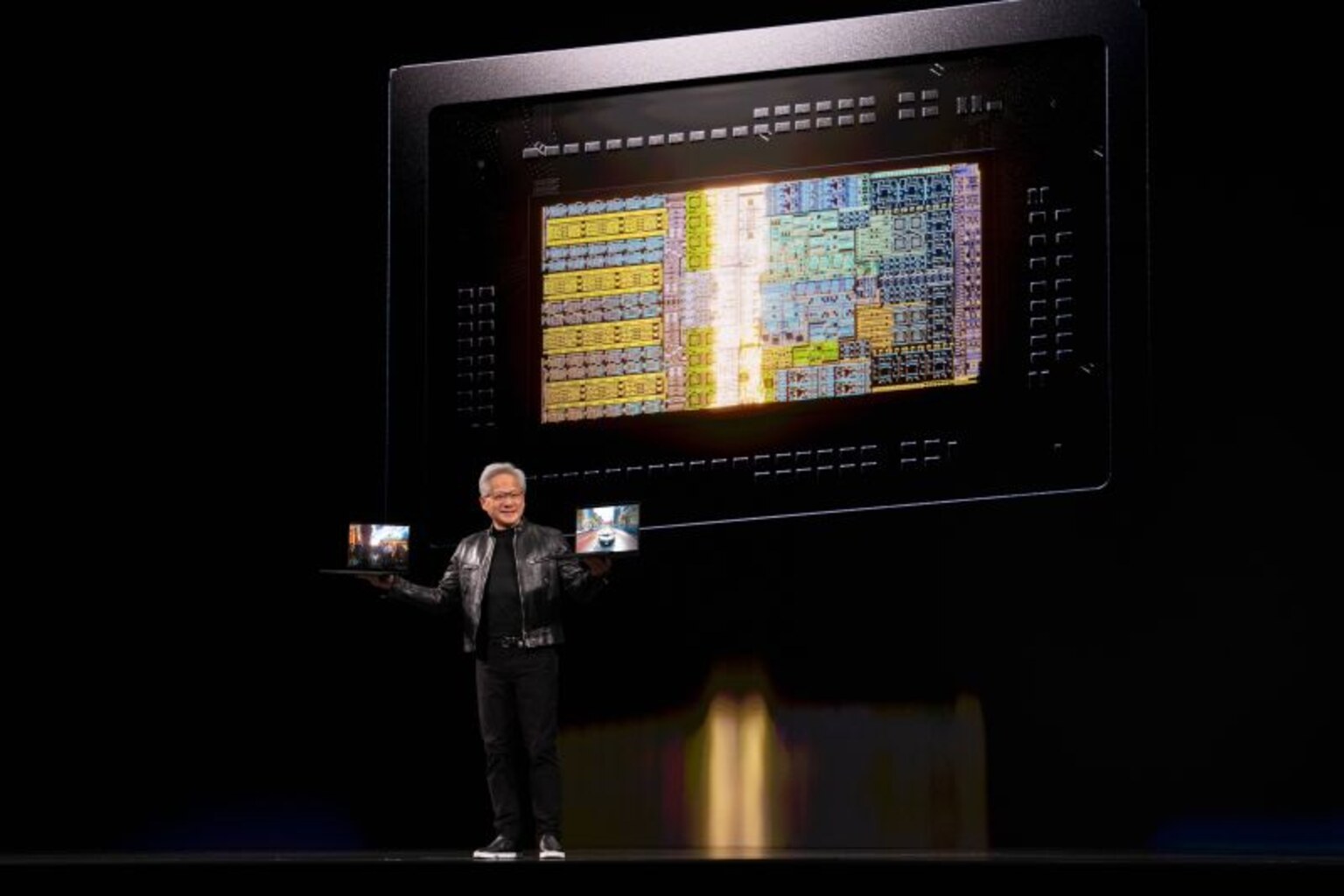
Intel Arrow Lake (Core Ultra 200H/HX-series) is the high-performance silicon solution for 2026 laptops that require massive multithreaded compute and discrete GPU parity. Unlike the ultra-efficient Lunar Lake, Intel Arrow Lake is designed for gaming rigs and mobile workstations where sustained wattage and raw core counts take precedence over 20-hour battery life.
Arrow Lake vs. Lunar Lake: Two Different Paths
In 2026, Intel has split its mobile lineup into two distinct architectures. Lunar Lake (Core Ultra Series 2) targets the 15W-30W segment, focusing on integrated graphics and all-day battery life for ultraportables. Intel Arrow Lake powers the 45W-157W segment, providing the necessary thermal headroom for high-end creative and gaming workloads.
While Lunar Lake uses an "on-package memory" design to reduce latency, Arrow Lake retains support for traditional SODIMM or LPDDR5X configurations. This allows manufacturers to build machines with up to 128GB of RAM, a necessity for professional AI development and large-scale 3D rendering.
NPU Performance and the Copilot+ Standard
Despite its focus on raw power, Intel Arrow Lake does not ignore the AI era. Copilot+ certified Arrow Lake SKUs carry a dedicated NPU reaching roughly 50 TOPS, while lower-tier non-Ultra parts sit below the 40 TOPS Copilot+ bar — always check the specific SKU.
This NPU allows users to run background AI tasks — such as eye contact correction, background blur, and local voice-to-text — without impacting the high-performance CPU cores. However, in most Arrow Lake machines, the NPU is a secondary processor compared to the NVIDIA RTX GPUs often paired with them.
Chip Class Comparison: Arrow Lake vs. Rivals
| Metric | Intel Arrow Lake (HX) | Intel Lunar Lake (V) | Snapdragon X Elite | Ryzen AI 300 |
|---|---|---|---|---|
| Max Core Count | 24 (8P + 16E) | 8 (4P + 4E) | 12 (Oryon) | 12 (Zen 5) |
| NPU TOPS | ~50 (HX SKUs) | 47-48 | 45 | 50 |
| Target TDP | 45W - 157W | 15W - 37W | 23W - 80W | 15W - 54W |
| Best For | Gaming / Workstations | Ultrabooks / Travel | Efficiency / Office | Balanced / AI |
| Example Laptop | Dell XPS 16 (2026) | ASUS Zenbook S 14 | Dell XPS 13 | Framework 16 |
Performance Realities: Gaming and Multi-Threaded Compute
The primary reason to choose an Intel Arrow Lake laptop is the "HX" class performance. The Core Ultra 9 285HX features 24 cores, enabling significantly faster code compilation and video export times than any Lunar Lake or Snapdragon alternative.
For gamers, Arrow Lake represents the best pairing for the next generation of discrete GPUs. Arrow Lake's improved IPC (Instructions Per Clock) and larger cache pools reduce CPU bottlenecks in high-refresh-rate gaming on machines like the Razer Blade 16. While Lunar Lake's integrated Arc graphics are impressive for light gaming, they cannot compete with the sustained thermal envelopes of Arrow Lake systems.
Who Should Buy Arrow Lake?
Choosing between Intel's two 2026 architectures depends entirely on your mobility needs. If your laptop spends 90% of its time plugged into a workstation dock, the performance ceiling of Arrow Lake is worth the trade-off in portability.
Developers: Those working with large Docker deployments, local Kubernetes clusters, or heavy C++/Rust compilation will benefit from the high core counts. Creatives: 4K/8K video editors and 3D artists need the high-wattage Arrow Lake chips to feed high-end NVIDIA RTX GPUs. Gamers:* Anyone targeting 1440p or 4K gaming should opt for Arrow Lake to avoid the thermal throttling common in thinner Lunar Lake machines.
Conversely, if you are a student or corporate traveler, the best Snapdragon laptops 2026 or Lunar Lake machines offer much better "lap-ability" and battery endurance.
Battery Life and Thermals
It is important to manage expectations regarding battery life. Intel Arrow Lake laptops typically achieve 6 to 10 hours of battery life, roughly half of what is possible on Snapdragon X or Lunar Lake systems.
The high power draw of the HX-series chips requires robust cooling solutions. Machines like the Razer Blade 16 (2025) utilize massive vapor chambers to keep high-wattage silicon from throttling during sustained workloads. If you need a machine for long flights, consult our best laptop for travel 2026 guide instead.
FAQ
Is "Razer Lake" the same as Intel Arrow Lake? No. "Razer Lake" is a common misspelling of Intel Arrow Lake, likely caused by the popularity of Razer's high-performance gaming laptops which often feature these chips. The actual silicon architecture is Intel Arrow Lake (Core Ultra Series 2 H/HX). Razer manufactures the laptops; Intel manufactures the Arrow Lake processors.
How does Arrow Lake compare to Apple M4 Max? Intel Arrow Lake HX processors generally outperform the M4 Max in multi-threaded raw compute and gaming due to their higher power limits (up to 157W vs ~60W-80W). However, the M4 Max remains superior in efficiency and unified memory bandwidth, which gives it an edge in local LLM inference (78 tok/s) and video editing on battery power. For a deep dive into AI silicon, see our best AI laptop 2026 review.
Do all Arrow Lake laptops have 50 NPU TOPS? No — only Copilot+ certified SKUs. Most Core Ultra 200HX-class processors carry a roughly 50 TOPS NPU, while lower-tier non-Ultra models may feature older NPU designs below the 40 TOPS bar. Always check the specific AIPC benchmark profile on our /benchmarks page before purchasing.
Can Arrow Lake run local LLMs? Yes, and quite well. While the NPU is capable of ~50 TOPS, Arrow Lake laptops are almost always paired with 32GB or 64GB of RAM, making them excellent for running 8B and 13B models. When paired with an NVIDIA RTX 50-series GPU, these machines become the fastest local AI workstations available, as seen in the best laptop for local LLM rankings.
How we tested
Our evaluation of Intel Arrow Lake hardware focuses on sustained multithreaded performance and thermal stability. We test HX-class machines using 30-minute stress tests to ensure that marketing-level boost clocks don't collapse into thermal throttling under real-world render loads.
Battery tests for Arrow Lake are conducted at 200 nits brightness under a "Creator" workload (Adobe Suite + local AI background tasks). NPU performance is verified through the Windows ML API, while local LLM speeds (tok/s) are measured using the llama.cpp framework. All data is integrated into our best laptops 2026 complete buyers guide and is available for audit at /benchmarks.
For more high-performance options, run a head-to-head comparison between any two machines on this page.